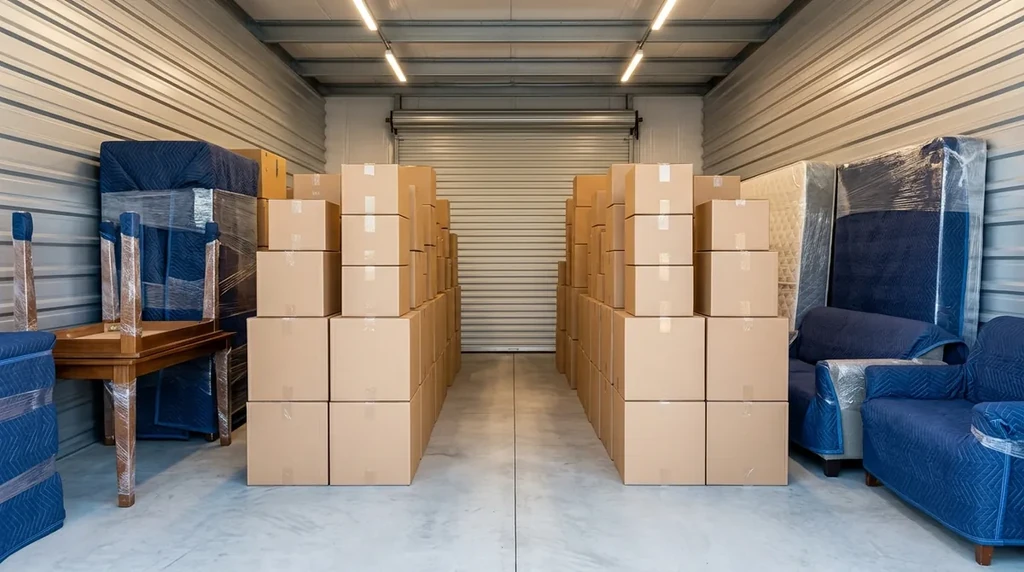
Renting a storage unit provides valuable extra space, but having additional square footage does not automatically make belongings easier to manage. A unit filled from floor to ceiling with randomly stacked boxes may hold plenty of possessions, yet retrieving one item from the back can quickly become frustrating. A better approach is to organize the unit around accessibility from the beginning.
An accessible storage layout considers what is being stored, how frequently different belongings will be needed, and how people will move through the available space. With some planning, a storage unit can function more like an organized extension of the home rather than a temporary holding area.
Plan the Layout Before Moving Everything Inside
Organization should begin before the first box enters the unit. Make a basic inventory of furniture, containers, seasonal belongings, equipment, and other possessions. This makes it easier to estimate how much floor space each category will require.
Large furniture that is unlikely to be needed soon can generally be positioned toward the back or sides. Items that may require regular access should remain closer to the entrance.
Leaving a narrow central walkway can make a major difference. Instead of unloading belongings into every available patch of floor, preserve enough space to reach different sections without moving several boxes first.
Create Zones for Different Types of Belongings
Dividing a storage unit into zones creates a simple mental map. Holiday decorations might occupy one section, household items another, while tools, sports equipment, or business materials can have their own designated areas.
This approach becomes particularly useful when a unit is accessed over several months. Instead of remembering where individual boxes were placed, renters only need to remember the general category.
For people comparing local options, Budget Mini Storage – Chino Valley offers drive-up and interior units at its West Center Street location, along with daily electronic gate access and moving supplies. These practical features can support an organized approach when belongings need to be added or retrieved over time.
Think About Frequency of Use
Not everything deserves the same position. A box containing family keepsakes that will remain untouched for a year can sit farther back than camping equipment needed several times during the summer.
Consider dividing possessions into high, medium, and low access categories. Frequently retrieved items should remain near the front and at a comfortable height. Moderately used belongings can occupy middle sections, while long-term storage items can go toward the back.
Seasonal rotation can also be useful. As one season ends, its belongings can move deeper into the unit while items for the upcoming season become easier to reach.
Use Vertical Space Carefully
Stacking is not necessarily a problem. Unplanned stacking is.
Using similar-sized, sturdy containers can create more stable arrangements than mixing boxes of dramatically different shapes. Heavier containers should generally remain underneath lighter ones, while fragile belongings should not support additional weight.
Freestanding shelving may also make appropriate items easier to see and retrieve, provided the shelving is suitable for the unit and complies with facility requirements. Vertical organization can preserve valuable floor space without creating a wall of boxes that blocks everything behind it.
Label More Than the Top of a Box
Labels are most useful when they can actually be seen. Once containers are stacked, a label placed only on top may disappear from view.
Clearly marking the outward-facing side can make identification faster. Rather than using broad descriptions such as “miscellaneous,” write specific categories such as “winter bedding,” “kitchen appliances,” or “camping accessories.”
For larger inventories, numbering boxes and keeping a simple list on a phone can make retrieval even easier.
Keep Future Visits in Mind
One common mistake is organizing a unit perfectly for move-in day without considering what happens afterward. New belongings may need to be added, old items may be removed, and priorities may change.
Leave some flexibility in the layout rather than filling every available gap immediately. An open area near the entrance can provide temporary space for sorting items during future visits.
Drive-up access can also be useful when regularly moving larger or heavier belongings because a vehicle can be positioned near the unit door rather than requiring items to be carried across long distances.

Make Storage Space Work for You
A well-organized storage unit is not necessarily the one that contains the greatest number of boxes. It is the one that allows belongings to be found and retrieved without turning every visit into a major rearrangement project.
By creating pathways, grouping similar possessions, prioritizing frequently used items, labeling clearly, and using vertical space thoughtfully, renters can make their storage units considerably more practical. A little planning at the beginning can save substantial time and effort throughout the entire storage period.