There is a meaningful difference between a home that has air conditioning and a home that uses it intelligently. Both might have identical equipment installed on the same street in Mandurah. But the household that runs its system on a fixed timer that ignores occupancy, keeps every zone running simultaneously regardless of whether anyone is in those rooms, and never adjusts the setpoint across a day that goes from mild to extreme in four hours is paying considerably more to achieve considerably less comfort than the household using the same hardware with smart controls.
This gap between installed capacity and optimised performance is increasingly being closed by automation. Smart air conditioning controls, occupancy-responsive zoning, and integration with home energy systems are not niche technologies for early adopters. They are mainstream, accessible, and cost-effective for Mandurah homeowners who want to get more value from the air conditioning they already have or are planning to install.
This guide covers how smart air conditioning works in practice for residential Mandurah homes, which automation features deliver genuine value, and how climate control integrates with solar panels and broader home energy management in ways that meaningfully reduce both running costs and the household’s dependence on grid electricity. Whether you are working with an air conditioning Mandurah specialist to upgrade an existing system or planning a new installation, understanding these automation possibilities before you commit shapes a smarter outcome.
What Smart Air Conditioning Actually Means for a Residential Home
Smart air conditioning, in the residential context, refers to systems and controls that go beyond basic thermostat operation to actively manage when and how the system runs based on real-time information and programmed preferences.
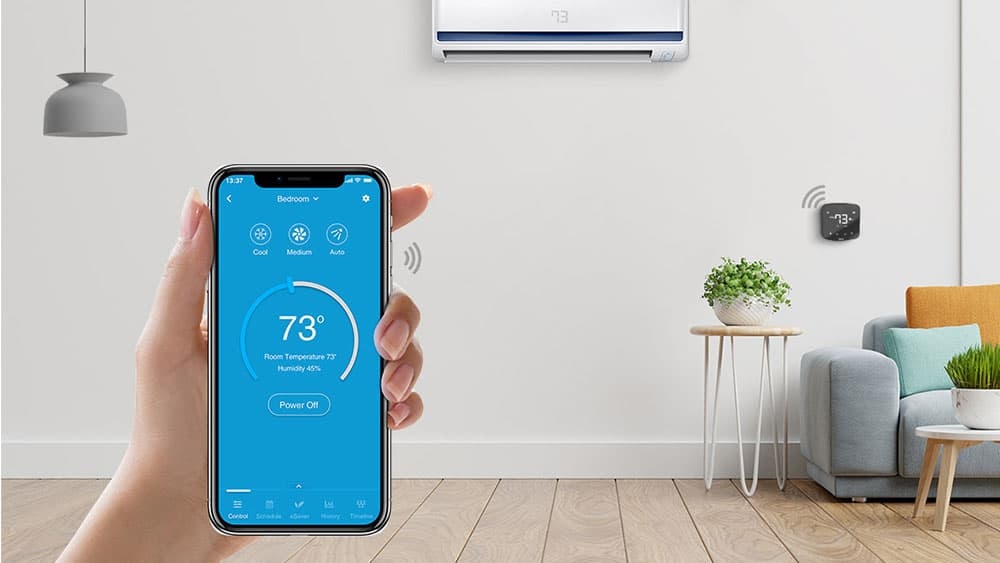
At the most basic level, this means Wi-Fi enabled control through a smartphone app. The ability to turn the system on from the car on the way home from work, ensuring the house is cool by arrival, is a genuine convenience improvement over a fixed timer. But the value of smart control goes further than remote operation.
Occupancy sensing. Systems that integrate with occupancy sensors or that use geo-fencing on smartphones to detect when occupants are approaching home can start cooling automatically at the right time without requiring any manual action. Conversely, they can detect when the home is empty and reduce or suspend operation, eliminating the energy waste of cooling an unoccupied house.
Usage scheduling. Beyond simple on/off timers, smart systems allow sophisticated schedules that account for the pattern of the week. Monday to Friday work schedules, different weekend patterns, school term versus holiday modes, and seasonal transitions can all be managed through programming that is set once and adjusted as needed rather than requiring daily manual attention.
Learning and adaptation. Some advanced systems incorporate learning algorithms that observe the household’s usage patterns over time and proactively optimise scheduling. A system that notices the household consistently pre-cools on Friday evenings may begin doing this automatically.
Energy monitoring integration. When smart air conditioning controls are integrated with the home’s energy monitoring system, the system can access real-time data on solar generation, battery state of charge, and grid electricity prices to make intelligent decisions about when to run and at what intensity.
Zoning and Its Often-Underused Potential
Most ducted air conditioning systems installed in Mandurah homes in the past decade include zone control capability. A disturbingly large proportion of those zone controllers are never used for anything more than controlling the entire system on or off.
This underutilisation represents a genuine and ongoing energy waste. A Mandurah home where the living areas are occupied during the day and bedrooms are empty, but all zones are being conditioned simultaneously, is cooling rooms unnecessarily and paying for the privilege throughout the entire cooling season.
Properly used zoning reduces energy consumption meaningfully while maintaining or improving comfort in the areas that are actually occupied. The typical residential zoning approach divides the home into a living zone and a sleeping zone at minimum. During the day, only the living zone runs. At night, the living zone is reduced or shut off while the sleeping zone maintains bedroom temperatures.
More sophisticated approaches create three or more zones that can be independently controlled: living areas, bedrooms, and often a separate zone for a home office or specific wing of the home. Each zone is conditioned only when occupied, reducing the total conditioning load and extending compressor life by reducing run hours.
The practical first step for Mandurah homeowners with an existing ducted system who are not using zone control effectively is to review the zone controller settings with the system’s manual or with a technician. In many cases, the zone control capability is already installed and functional but simply never configured beyond default settings.
For homes planning a new professional air conditioning installation in Mandurah, specifying zone control from the outset, and having it properly commissioned and explained at handover, ensures this capability is actually used rather than ignored.
Integrating Air Conditioning with Solar Generation
For the growing proportion of Mandurah households with rooftop solar panels, the relationship between solar generation and air conditioning operation is one of the most impactful areas where intelligent management creates financial value.
The fundamental opportunity is simple: air conditioning is a large and flexible load, and solar generates its peak output at the same time of day that Mandurah’s heat is building. Running the air conditioning preferentially during solar generation hours, using electricity that would otherwise be exported to the grid at the low feed-in tariff, captures the value of that generation at the avoided retail electricity rate rather than the lower export rate.
In practice, this means pre-cooling the home during the middle of the day while solar generation is at its peak, building up a thermal reserve in the home’s thermal mass and in the cooled air, and then reducing the system’s output or allowing the temperature to drift slightly upward in the late afternoon and evening when grid electricity would otherwise be imported.
A home with good insulation, pre-cooled to 22 degrees by midday using solar electricity, will maintain comfortable temperatures into the evening with less additional conditioning than a home that starts cooling from 30 degrees at 5pm using grid electricity. The pre-cooling strategy both reduces grid import and improves occupant comfort through the afternoon peak.
Smart air conditioning controllers that can access the home’s solar generation data through integration with the inverter monitoring system can automate this pre-cooling approach, running the system at higher output when solar generation is abundant and reducing output when generation drops off.
Setpoint Management and Its Effect on Running Costs
The setpoint temperature is the most direct control variable in residential air conditioning management, and it has a larger effect on running costs than most Mandurah homeowners appreciate.
Each degree Celsius that the cooling setpoint is lowered below what is genuinely needed for comfort increases energy consumption by approximately 5 to 8 percent for a conventional reverse cycle system. For a household that runs its ducted system at 20 degrees when 24 degrees would be perfectly comfortable, this represents a running cost penalty of 20 to 32 percent relative to the comfortable setpoint.
This is not a recommendation to compromise comfort. It is a recommendation to understand what temperature is actually comfortable and to set the system to achieve that temperature rather than a lower temperature driven by habit or a belief that colder is better. Most healthy adults find temperatures between 22 and 26 degrees comfortable for sedentary activities. Mandurah homes on hot summer days are often set to temperatures well below this range.
Gradual adjustment toward a higher setpoint, combined with ceiling fans that create air movement that makes a given temperature feel more comfortable, frequently allows Mandurah homeowners to maintain genuine comfort at setpoints 2 to 3 degrees higher than they currently use. The energy saving from this adjustment is ongoing and compounds across the full cooling season.
Ceiling Fans and Air Conditioning: The Partnership Most People Ignore
Ceiling fans do not cool the air. What they do is create air movement that accelerates evaporative cooling of the skin, making a given air temperature feel between 2 and 4 degrees cooler to an occupant. This perceived cooling effect allows the air conditioning setpoint to be raised without any reduction in occupant comfort.
A room maintained at 24 degrees with a ceiling fan running feels as comfortable as one at 21 or 22 degrees without air movement. The energy consumed by a ceiling fan running at medium speed is a fraction of what an air conditioning system uses. The combination of a slightly higher air conditioning setpoint and ceiling fans running in occupied rooms consistently reduces overall cooling energy consumption without sacrificing comfort.
The practical caveat is that ceiling fans only work when there are people in the room to benefit from the air movement. Running ceiling fans in empty rooms achieves nothing except electricity consumption. The right approach is to turn ceiling fans on in rooms that are occupied and turn them off when leaving.
Ventilating with Mandurah’s Natural Cooling Resource
Mandurah homeowners have access to a natural cooling resource that many underutilise: the Fremantle Doctor, the afternoon sea breeze that moderates temperatures across the coastal strip and the Peel region from late morning through the afternoon.
On days when the sea breeze is well-established, outdoor temperatures can drop from mid-thirties to mid-twenties within an hour or two of the breeze’s arrival. A home that is able to be opened effectively during this transition period, with windows on the south-west side opened to capture the incoming breeze and complementary openings on the sheltered side creating cross-ventilation, can be significantly cooled without any mechanical assistance.
The challenge is that the sea breeze does not arrive at a predictable exact time and does not always penetrate as far inland as some Mandurah locations. And on days when the north-easterly persists through the afternoon without a breeze change, natural ventilation is not a viable cooling option.
Smart home automation that monitors outdoor temperature through a weather station or local weather feed can automate the recommendation to switch from mechanical to natural ventilation when outdoor conditions become favourable, taking the judgement out of the decision.
When to Upgrade vs When to Maintain an Existing Residential System
Mandurah homeowners with existing air conditioning systems periodically face the question of whether to continue maintaining an ageing system or replace it with a more efficient modern alternative.
Several indicators suggest that replacement is the more economical choice:
The system is more than twelve to fifteen years old and requires frequent repairs. An ageing system that is consuming increasing amounts in repairs is approaching the point where replacement is more economical than continued maintenance.
The system’s efficiency is significantly below current standards. Modern inverter reverse cycle systems are substantially more efficient than systems of a generation ago. The annual running cost saving from a highly efficient modern system compared to an older unit can be significant, improving the financial case for replacement.
The system cannot be integrated with smart home or energy management systems. Older systems that lack Wi-Fi control capability cannot participate in the smart home and solar integration strategies described in this article. Replacement with a modern connected system opens these opportunities.
The system is no longer appropriately sized for the home. Extensions, additions, and changes in usage patterns sometimes leave existing systems too small or too large for the current home configuration.
For professional air conditioning services in Mandurah including assessment of whether repair or replacement is the right decision for a specific system, engaging a qualified air conditioning Mandurah specialist, like iBreeze for an honest appraisal provides the basis for an informed choice rather than a reactive decision. A local specialist who understands the demands of the Peel region climate and the specifics of your home configuration gives you a recommendation grounded in genuine context rather than a generic assessment.
Conclusion
Smart air conditioning in a Mandurah home is not simply about having the latest technology. It is about using whatever system is installed more intelligently, whether that means properly configuring zone controls, pre-cooling during solar generation hours, managing setpoint with an understanding of what actually drives comfort, or integrating the system with the home’s broader energy management.
The rewards of intelligent residential air conditioning management compound across a long Mandurah cooling season. The same house, with the same equipment, managed intelligently versus managed by default, consistently achieves better comfort at lower cost.
That gap is entirely within the control of any Mandurah homeowner who takes the time to understand their system and use it well.